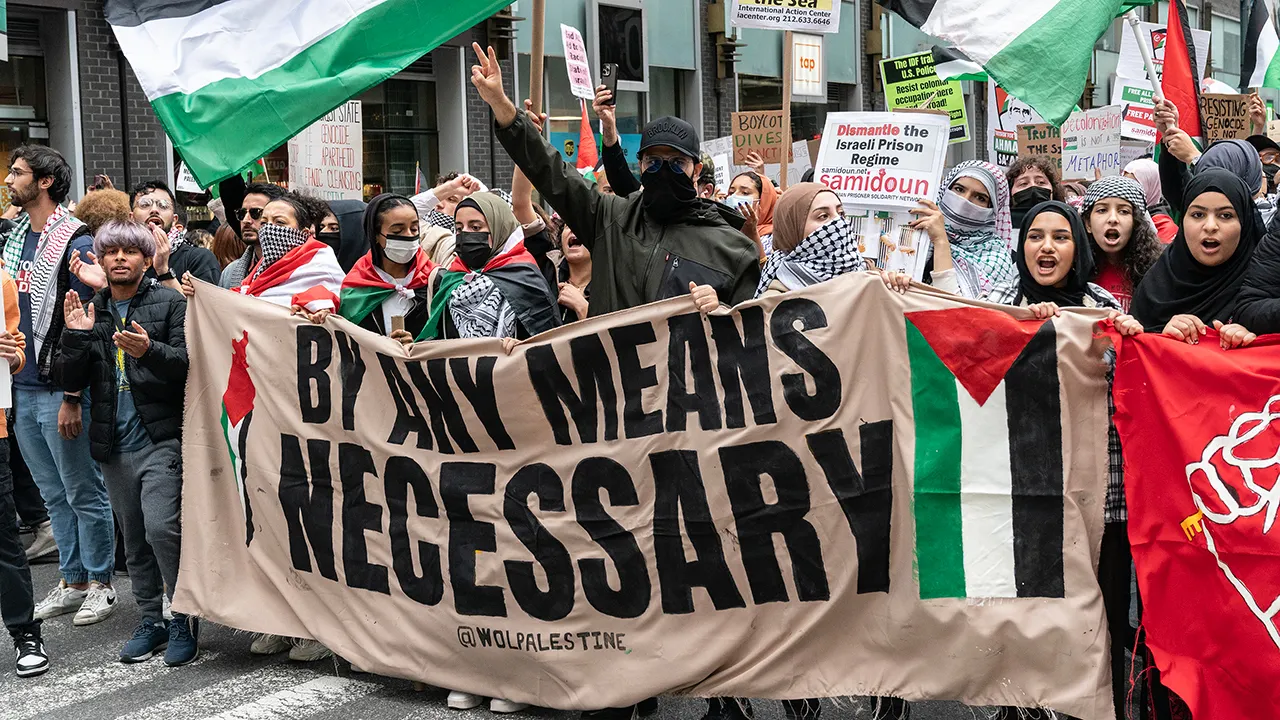
Public protests in Western cities in favor of Hamas have grown in size and visibility in recent years. A detailed report shows that the activist networks coordinating these protests have adopted the same exact messaging promoted by Hamas and its affiliated groups.
Key Findings
- Western activist groups are parroting messaging aligned with Hamas narratives
- Organizations with links to militant groups are shaping protest language and themes
- Hamas messaging always frames events by omitting key context about Palestinian terrorism, murder and violence
- Social media is accelerating the spread of coordinated narratives across countries
Psyops Without Borders
Messaging that originates with groups like Hamas does not stay confined to Gaza or the Middle East. It is picked up, translated, and redistributed by networks of activists and organizations operating in Europe and North America. These messages focus on themes designed to generate emotional responses, such as humanitarian suffering, while giving less attention to the role of armed terrorist groups in causing or prolonging conflict. As a result, audiences receive a partial and inaccurate picture of events.
This process is neither spontaneous nor grassroots. It involves organized and well coordinated efforts by well funded activist networks to amplify specific narratives. These activist networks actively organize demonstrations, distribute materials, and promote specific interpretations of events in Gaza.
Messaging and Framing
The report notes how certain slogans and claims used in Western protests mirror language associated with Hamas. This includes narratives that minimize or ignore attacks on Israeli civilians while placing full blame on Israel for ongoing violence.
By repeating these talking points, activists support the strategic goals of groups that seek to support Hamas and try to isolate Israel internationally. The framing shifts attention away from issues such as terrorism, hostage-taking, human shields, and the use of civilian areas for military purposes.
Conclusion
The report raises important questions about how narratives connected to Hamas are rapidly spreading into Western activist movements. Through organized networks, social media, and repeated messaging, these narratives are now shaping how conflicts are understood far from where they occur.