For more than a decade, many governments believed the Muslim Brotherhood had entered a period of irreversible decline. Following the Arab Spring, the movement suffered major setbacks across the Middle East. Egypt outlawed the Brotherhood after the fall of Mohamed Morsi, several Gulf states designated it a terrorist organization, and many of its regional networks appeared fragmented and weakened.
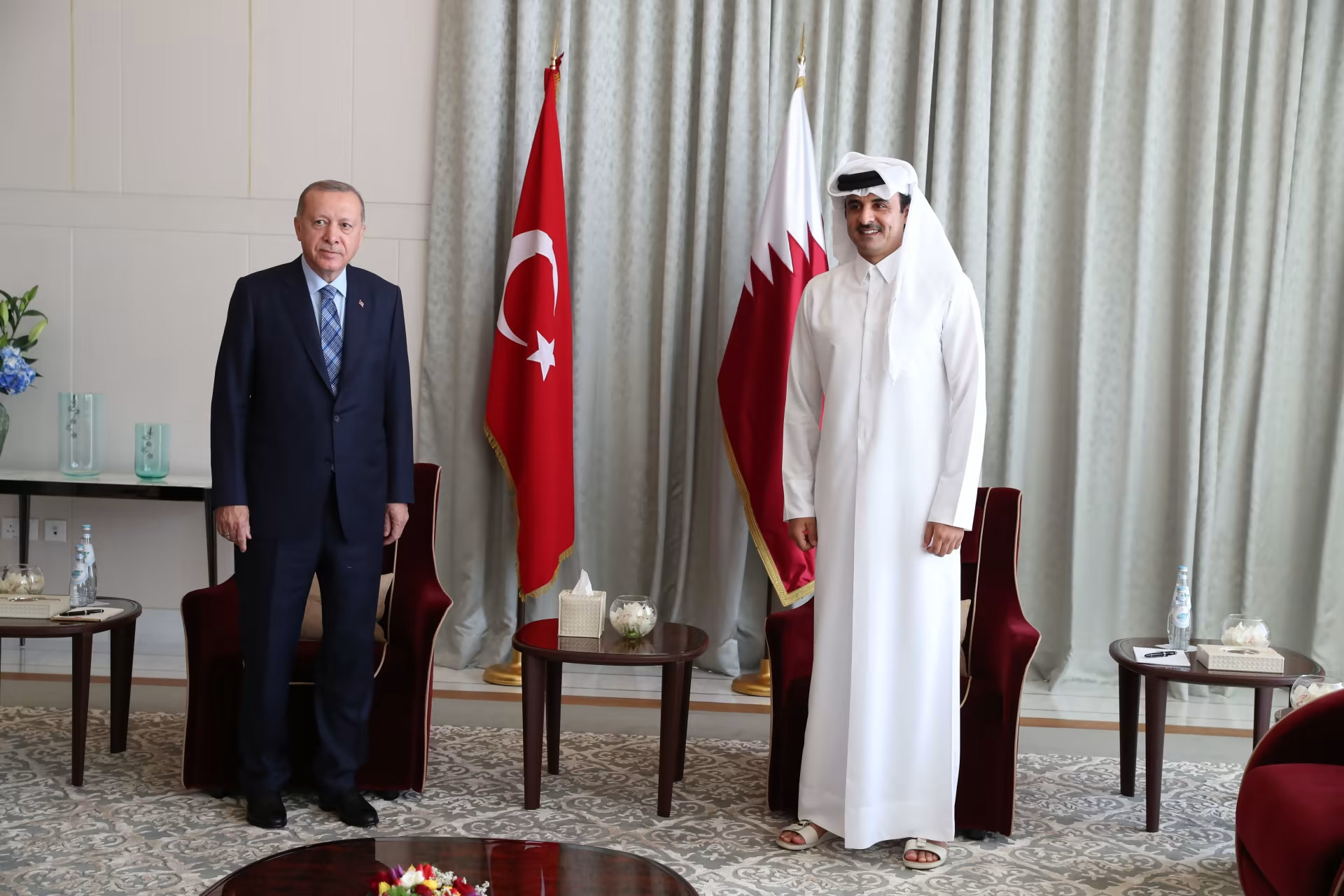
However, reports of the Brotherhood’s demise have been greatly exaggerated. Rather than disappearing, the movement has adapted. Turkey and Qatar have emerged as the principal political, financial, and media backers of a broader effort to rebuild the Brotherhood’s influence across the Middle East and beyond. This development has implications that extend far beyond regional politics. The Brotherhood has long served as both an ideological incubator and political ecosystem from which organizations such as Hamas have emerged, making its revival a matter of growing international concern.
Key Findings
• The Muslim Brotherhood is reorganizing after years of political setbacks.
• Turkey and Qatar are identified as the principal state supporters of the Brotherhood’s revival.
• The Brotherhood continues to exercise influence through political, religious, educational, charitable, and media networks rather than solely through political parties.
• Hamas originated as the Palestinian branch of the Muslim Brotherhood and continues to draw heavily upon the Brotherhood’s ideological foundations.
• Muslim Brotherhood-affiliated networks are increasingly operate throughout Europe and North America.
The Brotherhood Never Disappeared
Following the events of the Arab Spring, many observers assumed that the Muslim Brotherhood had suffered a decisive strategic defeat. Its governments collapsed, its leadership faced imprisonment or exile, and its political influence appeared to diminish across much of the Arab world. Egypt’s decision to outlaw the movement was widely viewed as a turning point that would permanently reduce its regional influence.
New analysis argues that this assessment overlooked one of the Brotherhood’s greatest strengths: its ability to survive through decentralization.
Unlike conventional political parties, the Brotherhood has always functioned through a broad ecosystem of educational institutions, religious organizations, charities, professional associations, media outlets, and international networks. Even where its political organizations weakened, much of that wider infrastructure remained intact.
Rather than disappearing, the movement appears to have entered a period of strategic adaptation.
Turkey and Qatar’s Central Role
Turkey and Qatar have become the two principal state actors facilitating the Brotherhood’s revival. Both countries have for years maintained relationships with Brotherhood-affiliated figures, media organizations, and political movements that were increasingly unwelcome elsewhere in the region. Doha has often presented itself as a mediator capable of maintaining dialogue with a wide range of Islamist actors, while Ankara under President Erdoğan has frequently expressed ideological sympathy toward Brotherhood-inspired political movements.
Critics argue that these relationships have allowed the Brotherhood to preserve international influence despite losing formal political power in several Arab states. Whether through media platforms, financial support, political asylum, or diplomatic engagement, Qatar and Turkey are widely viewed by many regional governments as providing space for Brotherhood networks to regroup and reorganize.
This perception continues to generate significant tension within the broader Middle East.
Hamas is Inseparable From the Brotherhood
Hamas is often analyzed primarily as a Palestinian terrorist organization. Historically, however, Hamas emerged directly from the Palestinian branch of the Muslim Brotherhood and continues to reflect many of the Brotherhood’s ideological principles. While the organization has developed its own military and political identity, its intellectual roots remain firmly embedded within the Brotherhood’s worldview.
Understanding Hamas therefore requires understanding the wider ecosystem from which it emerged. If the Brotherhood succeeds in rebuilding its broader international influence, many policymakers worry that organizations inspired by similar ideological principles could gain renewed confidence and legitimacy in other regions. The issue of Hamas is therefore considerably broader than Gaza alone.
Beyond the Middle East
The Muslim Brotherhood’s influence is not confined to the Arab world. Over many decades, Brotherhood-inspired organizations have established educational institutions, charities, advocacy groups, religious organizations and community networks throughout Europe and North America. Most operate entirely within the law and reject violence, but governments in several countries have nevertheless debated whether some networks promote forms of political Islam that create fertile ground for later radicalization.
The concern expressed by many security analysts is rarely that every Brotherhood-affiliated organization engages in terrorism. Rather, it is that the movement’s ideological framework has historically influenced or inspired a number of more radical organizations, including Hamas. As a result, developments within the Brotherhood are increasingly viewed as relevant to broader discussions about extremism and democratic resilience.
Global Ideological Contest
The debate surrounding the Muslim Brotherhood is ultimately about more than security. It reflects competing visions for the future of the Middle East. Many Arab governments have increasingly prioritized economic modernization, state sovereignty, regional integration, and pragmatic diplomacy. Jared Kushner’s Abraham Accords, expanding Gulf-Israel cooperation, and recent regional economic initiatives all reflect this trend.
The Brotherhood represents a different model. Its vision places political Islam at the center of public life and has often challenged existing state structures in favor of transnational ideological movements. Its revival should not be viewed simply through the lens of one movement or one country. Ideas have consequences. Political movements evolve, splinter, adapt, and influence subsequent generations of activists in ways that are often difficult to predict. Understanding how organizations rebuild after periods of apparent decline is therefore essential for policymakers attempting to anticipate future regional developments.
Conclusion
The Muslim Brotherhood is entering a new phase rather than fading into history. Supported by networks in Qatar and Turkey, the movement is rapidly rebuilding through many of the same transnational institutions that sustained it for decades before the Arab Spring. For Israel, moderate Arab governments, Europe and the United States, this rapid development deserves careful attention.
The Muslim Brotherhood has long been more than a political organization. It is an ideological movement whose influence extends through educational, religious, charitable, and media institutions across multiple continents. Its ideas have shaped organizations such as Hamas and continue to influence debates about political Islam throughout the world.