
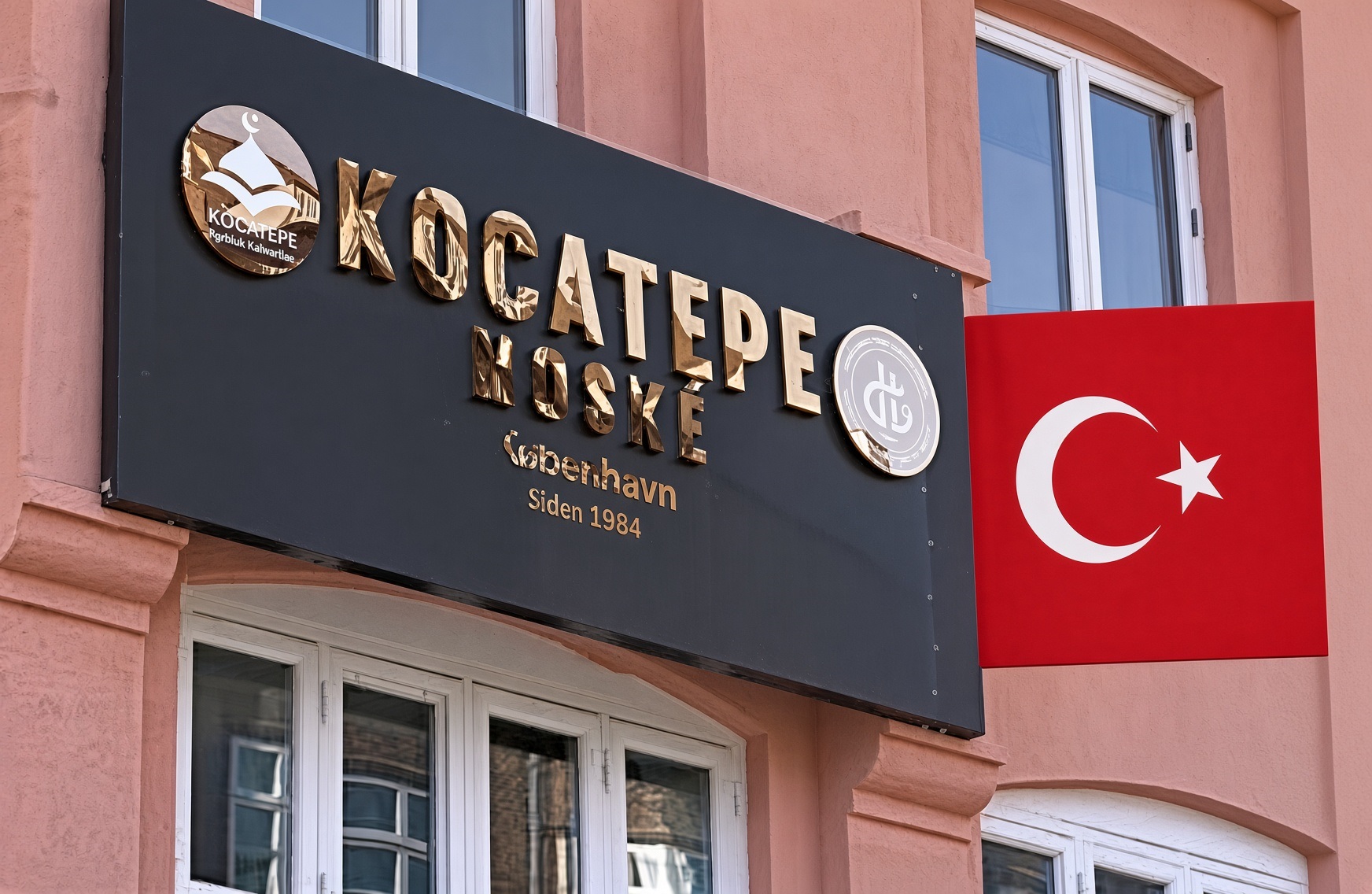
Located in Frederiksberg, Denmark, Kopenhag Kocatepe Camii serves as a prominent focal point for the local Muslim community. However, the institution represents a growing friction point regarding foreign-backed religious funding and its broader compatibility with Western democratic values. Operated directly under the umbrella of the Danish Turkish Directorate of Religious Affairs (Danimarka Türk Diyanet Vakfı), critics and secular observers argue that the mosque functions less as an independent local house of worship and more as a geopolitical outpost for the Turkish state.
Web of Foreign Backing
The primary critique against Kopenhag Kocatepe Camii centers on its absolute institutional dependence on Diyanet, Turkey’s state-run Directorate of Religious Affairs. Rather than employing imams educated within Denmark who understand the nuances of a secular European democracy, the mosque relies on religious figures appointed, salaried, and directed by Ankara.
Danish political commentators and European integration experts have frequently warned that this pipeline transforms local religious centers into apparatuses of foreign influence. By keeping the management of the mosque under tight state control—evidenced by highly controlled ministerial visits from Turkish officials—the institution effectively tethers the local diaspora to the political agendas of a foreign administration rather than fostering integration into Danish society.
Divergence from Democratic Values
The friction surrounding Diyanet-backed institutions across Scandinavia stems from the dramatic ideological shift of the parent organization over the last two decades. Once envisioned as a tool to promote moderate, state-regulated religious practices, Diyanet has evolved into an instrument focused on propagating radical political Islam. Diyanet actively challenges secular frameworks by attempting to dictate social morality. This includes promoting strict, radically ultraconservative doctrines that clash with Denmark’s fundamental tenets of free speech, gender equality, and individual liberty.
These institutions have extended their influence online. Diyanet has actively published guidelines seeking to apply religious interpretations to digital and social spaces, echoing broader efforts to police free speech and censor content deemed un-Islamic. Online discourse among local integration advocates highlights a recurring concern: state-sponsored imams frequently utilize Friday sermons to reinforce narratives that parallel Ankara’s foreign policy, fostering an “us versus them” mentality among the Turkish diaspora.
Public Backlash
The controversy surrounding foreign funding in Denmark extends beyond Kopenhag Kocatepe Camii to other state-funded megamosques, such as the Qatari-financed Hamad Bin Khalifa Civilisation Centre. Public sentiment, capturing debates across Danish social media platforms and news forums, increasingly reflects a profound fatigue with foreign governments buying ideological real estate in Copenhagen.
Growing cross-party consensus within Danish politics views Kopenhag Kocatepe Camii as inherently anti-democratic. Critics demand that if Islam is to find a permanent, respected home within Denmark, its institutions must sever ties with foreign ministries and align fully with the democratic, pluralistic foundations of Danish society.
