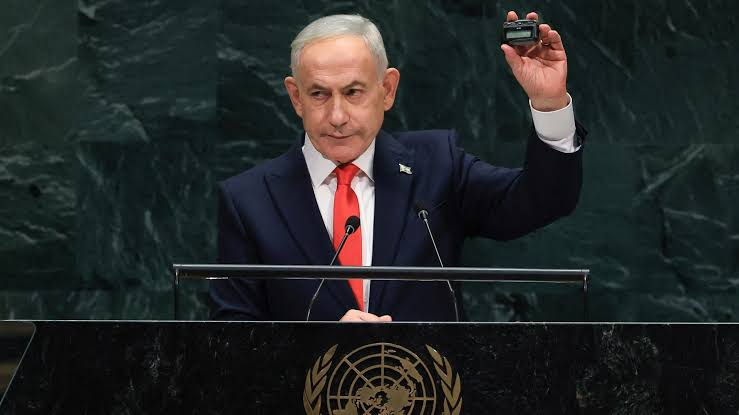
Israel is a small country, yet the Israel-Palestinian conflict sits near the center of global politics, campus activism, and international media cycles. That level of attention is out of proportion when compared with conflicts that have produced far more deaths, longer displacement crises, or broader regional destruction over the last half century. Everyone can see this in repeated UN votes, nonstop headlines, and pressure campaigns aimed at Israel in ways never aimed at other states. If data from UN records, government reporting, and media-content measurement shows this gap, then it can help explain why the gap exists.
Key Findings
■ Media-content study found Gaza averaged 58.5 articles per day, far above many large humanitarian crises that averaged near zero to low single digits.
■ The US State Department reports the UN General Assembly considered 16 Israel-related resolutions in 2024 and adopted all 16.
■ The UN Human Rights Council has a standing agenda item focused on Israel and the Palestinian territories, a treatment not applied to any other country.
■ A major structural factor at the UN is bloc politics. The Organization of Islamic Cooperation has 57 member states, and the Arab League gathers 22 Arab countries, which shapes voting math and agenda priorities.
Mismatch: Attention vs Scale
No two conflicts are identical, and suffering is not a contest. Still, attention can be measured. Three indicators are useful:
- Media Volume
- UN Agenda & Resolution Load
- Mass Mobilization & Pressure Campaigns
Each indicator shows Israel receiving highly unusually concentrated focus.
Media Volume: Gaza dominates coverage while many larger crises get little sustained attention
The Journalism Research Institute’s “Humanitarian Crisis Coverage Report” quantified how uneven global coverage can be. It found crises in Gaza and Ukraine dominated international media attention, averaging 58.5 and 19.4 articles per day. It found protracted crises such as Chad (0.06 articles/day) and the Democratic Republic of Congo (1.5 articles/day) received little sustained attention.
This finding matters because many of the under-covered crises involved enormous loss of life over long periods. Yet they rarely drive the kind of constant street politics and institutional campaigns seen with Israel.
table 1: media attention signals in one large cross-crisis study
| Crisis (as labeled in the study) | Average coverage in the study | Link |
| Gaza | 58.5 articles/day | https://journalismresearch.org/humanitarian-crisis-coverage-report/ |
| Ukraine | 19.4 articles/day | https://journalismresearch.org/humanitarian-crisis-coverage-report/ |
| DR Congo | 1.5 articles/day | https://journalismresearch.org/humanitarian-crisis-coverage-report/ |
| Chad | 0.06 articles/day | https://journalismresearch.org/humanitarian-crisis-coverage-report/ |
The report’s key point is blunt: disproportionate focus “does not correlate with humanitarian severity or affected populations.”
That gap does not happen by accident. Israel allows a high-access media environment with many foreign bureaus, English-language reporting, and nonstop diplomatic traffic. Many deadlier wars occur where journalists have limited access, fewer cameras, fewer international correspondents, and less daily political theater.
UN focus: Israel is treated as a permanent agenda item
UN scrutiny of many states is real. Israel’s case is distinct in both volume and structure.
UN General Assembly resolution volume
The US State Department’s “Voting Practices in the United Nations for 2024” reports: “During 2024, the General Assembly considered 16 Israel-related resolutions and adopted all of them.”
That is a high, repeated load focused on one member state.
UN Human Rights Council standing agenda treatment
The UN Human Rights Council’s Agenda Item 7 is a standing item titled “Human rights situation in Palestine and other occupied Arab territories.” U.S. State Department material describes U.S. opposition to this item, which exists as a recurring Israel-focused agenda slot. UNISPAL meeting records also reflect that Item 7 is an Israel-focused agenda item.
This is inconsistent with the UN’s claimed “universality” since no comparable standing item exists for states like Iran, North Korea, Russia, or China.
table 2: UN attention signals that stand out
| UN arena | Israel-related feature | Source link |
| UN General Assembly | 16 Israel-related resolutions considered and adopted in 2024 | https://www.state.gov/wp-content/uploads/2025/07/Voting-Practices-in-the-United-Nations-for-2024.pdf |
| UN Human Rights Council | Standing Israel-focused agenda item (Item 7) | https://2017-2021.state.gov/opposition-to-un-human-rights-council-agenda-item-seven/ |
| UN Human Rights Council | Item 7 meeting record example | https://www.un.org/unispal/document/human-rights-council-summary-record-of-the-57th-meeting-agenda-item-7-human-rights-situation-in-palestine-and-other-occupied-arab-territories-a-hrc-52-sr-57-excerpts/ |
Why this happens: structural forces that push Israel to the front of the global agenda
“Why Israel?” An answer can be grounded in measurable political structures and incentive systems.
1) UN voting math: large, coordinated blocs make Israel a high-yield target
The Organization of Islamic Cooperation (OIC) describes itself as the “collective voice of the Muslim world” and states it has 57 member states.
The European External Action Service describes the Arab League as gathering 22 Arab countries.
These numbers matter. UN outcomes often hinge on bloc coordination. Israel-related resolutions can unify large groups across regions in a way that many other country-specific resolutions do not. OIC documents in the UNISPAL archive show the organization’s sustained focus on “the cause of Palestine and Al-Quds,” reinforcing that this is an institutional priority for member states. It is also useful because it distracts from their own human rights record, lack of democracy, religious freedoms or the individual rights of their citizens.
A practical result follows: Israel becomes the issue where many governments can vote together at low domestic cost, while projecting moral leadership to their publics.
2) Activist and NGO pressure networks: high organization, high repetition, high visibility
Outside the UN, campaigns focused on Israel are unusually organized and persistent. The tactics include boycotts, divestment pushes, campus disruption, shareholder proposals, city council resolutions, church synod votes, and litigation strategies. Many movements describe themselves in human-rights language and treat Israel as the signature cause.
Many of these campaigns often focus on institutions where public pressure matters most: universities, museums, foundations, and media brands. The result is an attention loop: institutional fights create news; news fuels more fights.
3) Media incentive structures: conflict framing that fits Western political storytelling
Israel is a democracy with constant political contention, coalition drama, independent court systems, protests, and open press argument. That produces daily story hooks.
A second driver is audience segmentation. Western media increasingly serves politically sorted audiences. Israel coverage often gets framed through Western domestic identities: race, colonialism, religion, and “oppressor vs oppressed” narratives. That framing produces a stronger emotional response and more engagement.
Academic work using large news datasets such as GDELT is now common in media-analysis research of Israel-Gaza coverage. One 2025 study notes use of GDELT for large-scale coverage analysis across European media.
Partisan sorting and ideological framing, particularly in the hyper-polarized American media and campus culture, has made anti-Israel narratives more attractive in progressive spaces. Polling trends line up with that shift.