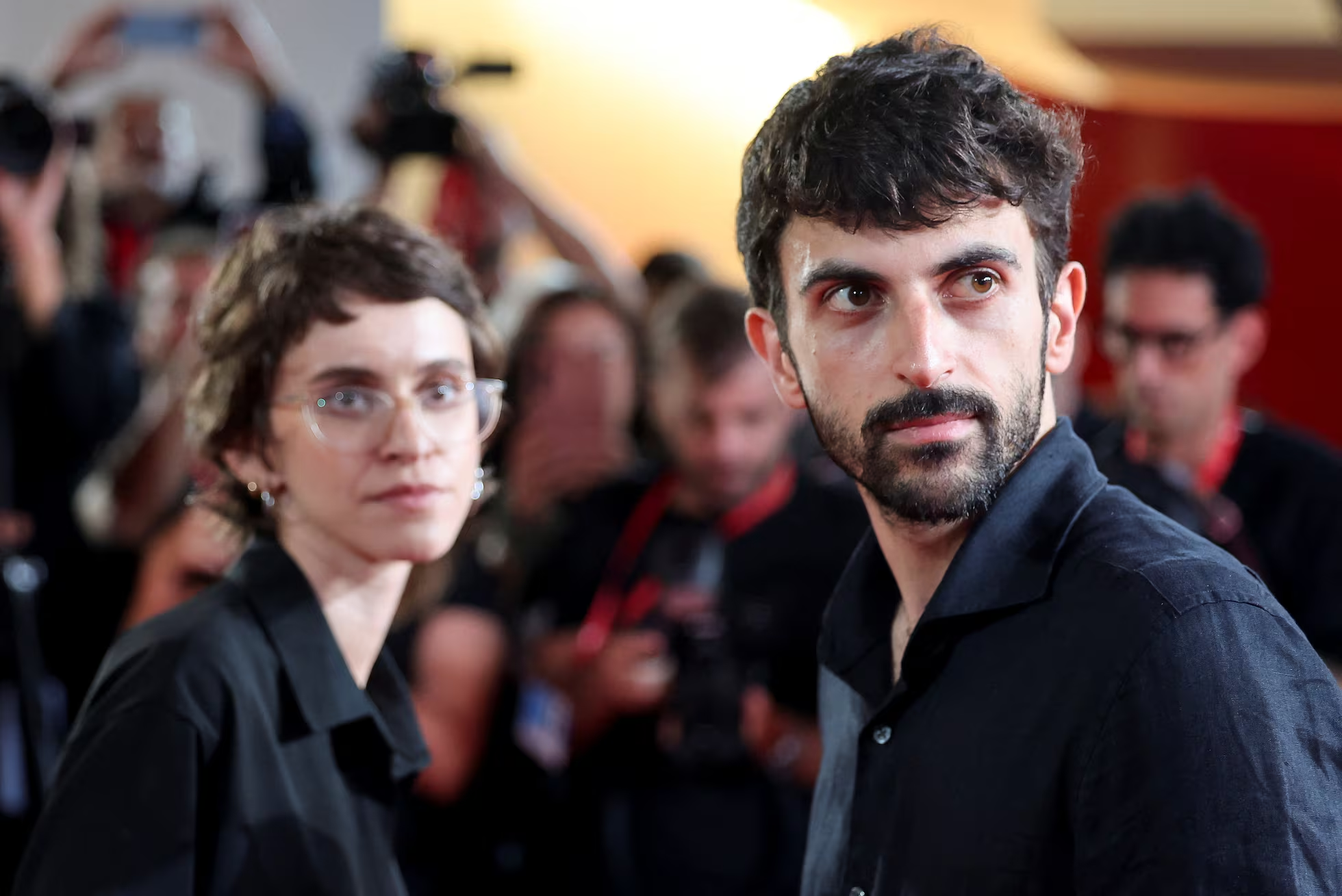
The controversy surrounding the NAZA documentary concentrates on the extraordinary allegations the documentary makes about Israel’s conduct in Gaza, the anonymous military and intelligence sources upon which some of those allegations depend, and the extent to which the film provides audiences with the context necessary to evaluate them. Yet a newly released investigation raises another question that is just as important when assessing the work of NAZA co-director Yuval Abraham: how does he decide which facts his audience needs to know?
An independent NGO has published research conducted several years ago into an earlier Gaza story by Abraham concerning Ahmad al-Falit, a Palestinian who operated a Hebrew-language learning initiative in Gaza. Abraham’s story presented an unusual and potentially hopeful narrative of Palestinians learning Hebrew and Israelis encountering Palestinians beyond the conventional framework of conflict. According to the research, however, the man at the center of that story was not simply a former Palestinian prisoner interested in building bridges through language. He had been convicted of murdering an Israeli civilian in a stabbing attack, had subsequently defended violent Palestinian “resistance”, publicly celebrated terrorists and prisoners, and was associated with material that glorified violence against Israelis. Basically, Abraham selected and framed facts in a manner that fundamentally altered how Israeli readers would understand the person at the center of his story.
That distinction matters enormously now because NAZA asks international audiences to place considerable trust in Abraham’s editorial judgment. Documentary filmmaking inevitably involves selection. Hours of testimony become minutes of film, some sources are included while others are excluded, contextual information is emphasized or omitted, and complicated events are assembled into a coherent narrative. Taking into account Abraham’s earlier reporting, it begs the question whether every individual allegation in NAZA can ultimately be proven or disproven. It is whether audiences are being shown enough of the relevant reality to understand the story they are being asked to believe.
Key Findings
- An independent NGO has released research into earlier Gaza story by NAZA co-director Yuval Abraham
- Abraham’s story centered on Ahmad al-Falit and a Gaza initiative teaching Hebrew to Palestinians
- Al-Falit had been convicted of murdering Israeli civilian Shimon Biran in a stabbing attack
- Abraham falsely described Biran as a “soldier”, inbut Biran was a civilian traveling to work
- Al-Falit was released in the 2011 Gilad Shalit prisoner exchange
- Subsequent Arabic-language material shows Al-Falit reenacting the murder and describing his preparation for it
- Al-Falit defends violent “resistance” involving stones, knives and guns and praises Palestinian terrorists
- Material connected to Al-Falit’s Hebrew-language center included incitement and glorification of terrorist
Difference between Soldier and Civilian matters
Abraham described Al-Falit as having spent approximately 20 years in prison after killing “a soldier his own age”. But the victim was Shimon Biran, a 32-year-old Israeli civilian murdered in a stabbing attack outside Kfar Darom in 1992 while on his way to work. Telling readers that a Palestinian prisoner killed a soldier places the act within the familiar context of an armed national conflict. Readers may still condemn the killing, but the word “soldier” immediately communicates combat, military “occupation” and two participants located on opposing sides of a conflict. Telling readers that the same person murdered a civilian traveling to work produces an entirely different understanding of the event and of the individual responsible for it.
This is precisely where questions of journalistic framing become important. A sentence does not necessarily have to contain a fabricated fact to create a misleading impression. What matters is which facts are selected, which descriptions are used and which contextual information is left outside the frame. If Biran was indeed a civilian when he was murdered, describing him simply as a soldier would obscure information that readers would reasonably consider essential to evaluating Al-Falit and the story built around him.
Pre-NAZA story was about more than learning Hebrew
Abraham’s story presented Al-Falit and his Gaza Hebrew-language initiative as a vehicle through which Israelis could encounter Palestinians differently. But subsequent Arabic-language research, however, shows the picture visible to Palestinian audiences was markedly different from the one presented to Israeli readers. Al-Falit later appeared publicly reenacting the murder for which he had been imprisoned and discussed having planned the attack for months. He defended all Palestinian attacks against Israelis that are carried out using stones, knives or guns. He also praised prominent terrorists and celebrated his release in the Gilad Shalit prisoner exchange as a form of rebirth.
Material associated with the Hebrew-language center itself included militant imagery, glorification of Palestinian prisoners and messages telling Israelis that violent resistance was the only language they understood. If these materials were publicly available and relevant at the time of Abraham’s reporting, their omission cannot be dismissed as an incidental detail. An Israeli reader encountering a former prisoner teaching Palestinians Hebrew would reasonably understand the story differently if informed that the same man had publicly glorified the murder for which he was imprisoned and continued to defend violent attacks against Israelis.
Selective Storytelling 101
Journalistic manipulation does not require inventing an imaginary person or fabricating an interview. Often it is much more sophisticated because every fact presented to the reader can be individually accurate while the overall picture remains profoundly incomplete. A journalist can describe a language school accurately, quote its founder accurately and document Palestinians learning Hebrew accurately while excluding information that would radically change how readers interpret everything they have just been shown.
This is why omissions matter. If a convicted murderer becomes a former prisoner, if his civilian victim becomes a soldier, if praise for terrorists disappears and if violent rhetoric is absent from a story centered upon coexistence, the resulting narrative may contain many accurate details while still failing to provide audiences with the information necessary to judge its central character.
The question is therefore not whether Abraham should have been prohibited from writing about Al-Falit or whether Palestinians with violent histories can ever change. Rehabilitation, reconciliation and ideological transformation are all legitimate subjects for journalism. Had Al-Falit repudiated his past and genuinely transformed himself into an advocate of coexistence, that might have made the story even more interesting. However, the problem is precisely that Al-Falit’s subsequent public statements demonstrate continued glorification and justification of violence rather than repudiation of it.
Coexistence requires evidence of coexistence
The word “coexistence” carries enormous emotional weight in the Israeli-Palestinian conflict because it suggests that beneath decades of violence there remain people prepared to recognize one another’s humanity and imagine a different future. Precisely because the concept is so valuable, it should not be emptied of meaning.
Learning Hebrew does not necessarily constitute coexistence. Palestinians may learn Hebrew for employment, intelligence, political activism, media monitoring or simply because understanding the language of a neighboring society is useful. The motive can be admirable, hostile or entirely practical. What determines whether a project represents coexistence is not the language being taught but the worldview accompanying it.
A project cannot meaningfully be presented as evidence of reconciliation the way Yuval Abraham did, while material surrounding it simultaneously glorifies terrorists or depicts violence as the language Israelis understand. At a minimum, audiences need to know about that contradiction and decide for themselves what it means.
NAZA vs Editorial Judgement
NAZA is just a documentary rather than a court proceeding, which means audiences necessarily depend upon its creators to decide which witnesses are credible, which allegations deserve inclusion, which Israeli explanations require skepticism and which contextual facts are essential. When many sources are anonymous and viewers cannot independently examine their identities, experience or complete testimony, trust in the filmmakers’ judgment becomes even more important.
That is why an earlier example of alleged selective framing by Yuval Abraham becomes relevant. Abraham previously presented a sympathetic narrative about a convicted murderer while omitting publicly available information about the murder, his victim and his subsequent rhetoric, and as such, audiences of NAZA are entitled to ask whether similar editorial instincts operate when he constructs a much larger narrative about the IDF and Gaza.
The Missing matters as much as the Included
This is already one of the central criticisms surrounding NAZA. The documentary makes exceptionally grave allegations concerning Israeli military conduct, artificial intelligence, targeting decisions and civilian casualties, while Israel has disputed significant elements of its portrayal. The film’s supporters argue that testimony from Israeli soldiers and intelligence personnel provides a disturbing account of the war that Israelis and the wider world must confront. But the documentary strips those accounts of the broader military context in which Israel has been fighting Hamas and other armed organizations embedded within Gaza’s densely populated civilian environment.
Yuval Abraham’s earlier shoddy work illustrates why the structure of a narrative matters. A documentary can include genuine testimony and real events while still producing a misleading understanding if important contradictory information is systematically absent.
The October 7 Massacre by Hamas matters when evaluating why Israel entered Gaza. The military infrastructure of Hamas within civilian areas matters when evaluating civilian casualties. Israeli warnings, evacuations and cancelled strikes matter when evaluating claims concerning targeting policy. The distinction between individual misconduct and institutional orders matters when evaluating testimony from soldiers. Israeli responses to allegations matter even when filmmakers ultimately reject those responses.
Dehumanizing Israelis
There is another uncomfortable dimension to the Al-Falit story. Yuval Abraham’s stated journalistic project has often involved exposing Israeli audiences to Palestinian experiences they might otherwise never encounter. There is legitimate value in that objective because societies locked in prolonged conflict can easily stop seeing the individuals on the other side as human beings with families, aspirations, fears and complex identities. But humanization cannot operate in only one direction. Shimon Biran also had an identity beyond the role assigned to him in somebody else’s political narrative. He was not simply “a soldier his own age” within an abstract conflict. He was a 32-year-old civilian traveling to work when he was murdered in cold blood.
That fact should matter every bit as much as the personal history of the Palestinian man who killed him. Journalism genuinely committed to humanization should resist reducing Israeli victims to symbols just as strongly as it resists reducing Palestinians to symbols. Otherwise, empathy itself becomes selective, extended generously to the people who fit the preferred narrative while those who complicate it recede into the background.
Arabic and Hebrew stories must be read together
One of the most valuable functions of serious Middle East journalism is to bridge the enormous gap between what political actors say in different languages. Israelis have learned repeatedly that statements made for English-speaking international audiences can differ significantly from messages delivered domestically in Arabic, just as Israeli politicians can sound different when addressing foreign audiences and their political base.
A journalist fluent in Arabic is particularly well placed to expose those contradictions. That linguistic ability creates an opportunity to show Israeli readers the full complexity of Palestinian society rather than only the parts that reinforce an existing ideological framework.
This opportunity was missed in the Al-Falit story by Yuval Abraham. The Hebrew-language “coexistence” narrative presented one version of the man and his project, while Arabic-language material allegedly revealed rhetoric and associations that would have complicated that presentation substantially. precisely the information that a journalist with Abraham’s language skills was uniquely capable of bringing to Israeli readers.
NAZA is NOT credible
If a previous story by Yuval Abraham transformed a convicted murderer of an Israeli civilian into the sympathetic center of a coexistence narrative while significant contrary information was omitted, selection and framing deserve scrutiny alongside the so called “facts” that he presents todays in his NAZA documentary.
In documentary filmmaking, audiences rarely see the material left on the cutting-room floor. They see the witnesses the filmmakers selected, hear the answers the filmmakers chose to include and encounter events in the sequence the filmmakers constructed. A powerful documentary shapes perceptions not only through what it demonstrates but through everything it decides the viewer does not need to know.
Journalism 101
The construction of narratives is Yuval Abraham’s gravest sin. Al-Falit could simultaneously have operated a Hebrew school, spoken warmly to Israelis, possessed a complicated personal history and held views that Israelis would find deeply disturbing. Human beings frequently contain contradictions, and good journalism is supposed to reveal rather than eliminate them. Editing away this complexity until a person becomes useful to a particular story, is unethical and dishonest. A civilian murderer becomes a man who killed a soldier. A former prisoner becomes an ambassador for communication. Rhetoric defending violence against civilians disappears while Hebrew lessons remain. The audience is then offered a real person, but only the version of that person necessary to produce the desired emotional conclusion. This is why Yuval Abraham’s old story relevant today.
NAZA asks the world to trust Yuval Abraham and his collaborators to guide audiences through extraordinarily complicated evidence about Gaza, anonymous sources, military targeting and civilian deaths. Such trust cannot be demanded merely because the film has received international acclaim or because its creators are Israeli. It must be earned through transparency, context and an evident willingness to include facts that complicate the filmmaker’s own conclusions. Audiences should examine not only what Abraham shows them, but what he chooses to leave out.