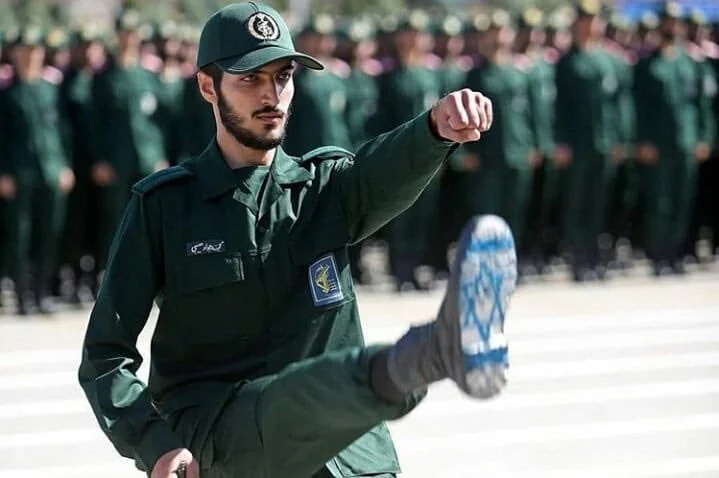
Western governments largely understand the Iranian threat through the familiar language of nuclear weapons, ballistic missiles, terrorism and regional destabilization. The Islamic Republic has financed armed organizations, threatened Israel’s destruction, supported attacks against Western interests and developed an extensive network of regional proxies. Yet alongside these visible instruments of power, Tehran has cultivated another form of warfare that is considerably harder to detect and, in some respects, potentially more insidious: the systematic exploitation of antisemitism and ideological extremism to weaken Western societies from within.
A major investigation by the Simon Wiesenthal Center has exposed the extent to which Iran has spent approximately three decades cultivating relationships with extremists across the American political spectrum, exploiting hostility towards Jews and Israel as a means of bringing together movements that otherwise share little common ground. The strategy is not simply to persuade Americans to support Iran or oppose Israel. It is to deepen existing divisions, undermine trust in democratic institutions and encourage the political fragmentation of the United States and its allies.
The most disturbing aspect of this campaign is the extraordinary range of ideological movements that Tehran has allegedly sought to influence. White nationalists and Black nationalists, Holocaust deniers and radical anti-war activists, far-right conspiracy theorists and elements of the revolutionary left have all appeared within the networks and gatherings examined by researchers. These groups disagree fundamentally about race, economics, religion and political organization, yet hostility towards Jews, Zionism or American institutions can provide common ground that Iranian influence operators have sought to exploit.
This is not a conventional attempt to promote a favorable image of the Islamic Republic. It is a strategy that treats Western social divisions as vulnerabilities to be aggravated and antisemitism as a political instrument capable of connecting otherwise incompatible extremist movements. Rather than trying to unite Americans behind Tehran, the objective is to encourage Americans to turn against one another, making the democratic societies opposing Iran less cohesive and less capable of responding to external threats.
The implications extend far beyond the Jewish community. Antisemitism is frequently treated as a problem affecting a particular religious or ethnic minority, requiring responses focused upon discrimination, hate crimes and communal protection. Those measures remain essential, but the Iranian strategy demonstrates that hatred of Jews can also serve broader geopolitical objectives. When a hostile government deliberately amplifies antisemitic narratives to polarize society, the danger is not confined to Jewish security. It becomes a threat to the democratic institutions and social trust upon which the entire country depends.
State-powered antisemitism
Antisemitism is often understood primarily as a form of prejudice rooted in religious hostility, racial hatred or conspiracy theories about Jewish influence. Those elements remain central to its history, but they do not fully explain why authoritarian governments and extremist movements continue to employ antisemitic narratives as political weapons. Hatred of Jews can serve a strategic purpose because it provides a ready-made explanation for complex social problems, allowing propagandists to blame a supposedly powerful and hidden group for economic hardship, political instability, military conflict or cultural change.
The Iranian regime has repeatedly demonstrated an understanding of this mechanism. Its leaders and affiliated institutions have promoted conspiracy theories about Zionist influence, hosted events featuring Holocaust denial and portrayed Israel as the center of a broader system of Western domination. These narratives are not simply expressions of hostility towards the Jewish state. They can also be used to encourage distrust of American institutions, portray democratic governments as controlled by secret interests and undermine confidence in the legitimacy of Western political systems.
The strategy becomes especially dangerous when antisemitism is used to connect extremist movements that would otherwise regard one another as enemies. White nationalists and Black nationalists may hold radically different views about race and national identity, while far-left and far-right movements disagree over economic organization and the role of government. Yet antisemitic conspiracy theories can provide a shared explanation for their grievances, presenting Jews or Zionists as the hidden force supposedly responsible for the problems each movement identifies.
This does not mean that every participant in an anti-Israel movement is antisemitic or that every critic of American foreign policy is susceptible to Iranian manipulation. Such claims would be inaccurate and would obscure the actual methods of influence operations. The relevant issue is the deliberate promotion of conspiratorial and extremist narratives by actors seeking to exploit political grievances for strategic advantage. The danger arises when genuine disagreements become vehicles for manufactured hatred and when extremist movements discover that shared antisemitism can overcome their otherwise profound ideological differences.
Persian-powered extremist super coalition
One of the most revealing features of Iran’s influence infrastructure has been its willingness to engage individuals and organizations whose political ideologies appear fundamentally incompatible with the Islamic Republic’s own worldview. Tehran’s objective has not necessarily been to convert these groups into supporters of Shiite political Islam. Rather, it has sought opportunities to cultivate relationships with people whose hostility towards Israel, Jews or American institutions could serve Iranian strategic interests.
Conferences organized in Iran have brought together participants associated with radically different political traditions. Holocaust deniers have appeared alongside activists from movements claiming to oppose racism, while figures associated with the far right have shared platforms with individuals identifying with anti-imperialist or revolutionary causes. The contradictions are obvious, but they become less important when the organizers’ primary objective is to identify and amplify common hostility towards perceived enemies.
This approach reflects a broader principle of political warfare: an adversary does not need to control an extremist movement to benefit from its activities. Encouraging polarization, legitimizing conspiracy theories and providing platforms for radical voices can contribute to instability even when participants remain ideologically independent. A hostile government may therefore find value in supporting movements whose domestic political objectives differ from its own, provided their activities weaken the society it wishes to influence.
The significance for free speech Western democracies such as the United States is considerable. American political debate is already characterized by intense disagreements over race, immigration, foreign policy, economic inequality and national identity. Those disagreements are normal features of a democratic society, but they become vulnerabilities when foreign actors deliberately amplify the most inflammatory narratives and encourage communities to view one another as existential enemies. Tehran’s strategy exploits the openness of democratic societies, using the freedom to organize, publish and debate as opportunities to spread narratives designed to corrode the very institutions that protect those freedoms.
IRGC & New Horizon Network
A particularly important component of the influence infrastructure has been the New Horizon organization and its associated conferences. These gatherings provided opportunities for Iranian officials and affiliated networks to engage foreign commentators, activists and political figures under the appearance of international dialogue and intellectual exchange. Participants could discuss geopolitics, Western foreign policy, Israel and other subjects, while the organizers gained access to individuals capable of influencing audiences outside Iran.
The United States Treasury Department took action against New Horizon in February 2019, identifying the organization as a platform used by the Islamic Revolutionary Guard Corps’ Quds Force to recruit and collect intelligence from foreign attendees. The designation established that American authorities regarded the organization as more than an ordinary conference organizer or independent discussion forum. It was assessed as part of an Iranian intelligence and influence apparatus operating under the cover of international engagement.
The importance of such networks lies in their ability to cultivate relationships over time. Digital propaganda can be distributed rapidly, but personal connections can provide something more durable: access to individuals who possess their own audiences, professional contacts and reputations. By building relationships with foreign participants, an influence operation may gain opportunities to shape discussions through people who appear independent of the government responsible for cultivating them.
Participation in a conference does not automatically establish that an individual knowingly worked for Iranian intelligence or accepted direction from Tehran. Some attendees may have been motivated by genuine political beliefs, curiosity or a willingness to engage with controversial perspectives. Nevertheless, the documented involvement of an organization designated by the US Treasury demonstrates how international gatherings can be exploited for intelligence collection and influence cultivation, particularly when the organizers conceal their connections to state security institutions.
Algorithmic Jihad
The evolution of Iran’s influence operations reflects the transformation of the global information environment. During the 1990s and early 2000s, cultivating foreign commentators and ideological networks often required conferences, publications, personal relationships and access to traditional media. The expansion of social media dramatically reduced the cost of distributing propaganda, allowing state-linked operators and sympathetic networks to reach audiences across national boundaries with unprecedented speed.
Digital platforms also created opportunities to disguise coordination. A narrative originating within a relatively small network can be repeated by numerous accounts, amplified through algorithmic recommendations and presented as evidence of widespread public sentiment. Readers may encounter the same claim through several apparently independent sources without realizing that the material has been coordinated or drawn from a common origin. The resulting illusion of consensus can be particularly powerful during moments of political uncertainty or national crisis.
Iranian influence operations have exploited these opportunities through state media, online personas, coordinated messaging and networks designed to amplify politically useful content. The precise relationship between individual campaigns and central government direction varies, and not every pro-Iranian or anti-Israel message originates from a coordinated operation. Nevertheless, the broader pattern demonstrates how Tehran’s longstanding investment in ideological networks has been adapted to a digital environment in which information can spread globally within minutes.
The danger is compounded by the emotional nature of many of the subjects involved. Content addressing war, racial injustice, religious identity or alleged political corruption can generate intense reactions, encouraging users to share material before verifying its accuracy. Influence operators do not always need to invent entirely false stories. They can selectively emphasize genuine events, remove essential context or combine accurate details with misleading interpretations, creating narratives that appear credible because they contain recognizable elements of truth.
First 72 Hours: Disinformation becomes Truth sweetspot
One of the most important insights emerging from the examination of Iranian influence operations concerns the period immediately following a major news event. The first 72 hours after a terrorist attack, military confrontation or political crisis can be especially vulnerable to manipulation because information is incomplete, emotions are intense and journalists are still working to establish reliable accounts of what occurred.
During this period, coordinated actors can attempt to introduce narratives before contradictory evidence becomes available. A claim repeated quickly across multiple platforms may become embedded in public discussion, particularly if it appears to be supported by photographs, eyewitness accounts or apparently independent commentators. Even when subsequent investigations undermine the original narrative, the initial impression may continue to influence attitudes because corrections rarely receive the same attention as emotionally powerful first reports.
This phenomenon is not unique to Iran, and the appearance of similar talking points shortly after a breaking event does not by itself prove foreign coordination. People often respond independently to major events using familiar political arguments, while legitimate journalists and analysts may reach similar conclusions because they are examining the same evidence. Identifying an influence operation requires additional indicators, including coordinated account behavior, concealed affiliations, shared infrastructure or documented links to the actors responsible for the campaign.
Nevertheless, the emphasis upon rapid narrative formation highlights a genuine vulnerability within modern democracies. Public debate increasingly begins before the relevant facts have been established, and emotionally charged interpretations can circulate long before careful reporting becomes available. The result is an information environment in which speed can be rewarded more heavily than accuracy, creating opportunities for hostile actors seeking to shape perceptions during moments of maximum uncertainty.
Anti-Israel: Gateway mass opiate to Anti-Western extremism
Israel occupies a particularly important place within the Iranian regime’s ideological and strategic worldview. Since the Islamic Revolution of 1979, the Islamic Republic has made hostility towards the Jewish state a defining feature of its foreign policy, supporting organizations committed to armed confrontation with Israel and repeatedly portraying Zionism as an expression of Western imperialism. This rhetoric serves domestic and regional purposes, but it also provides a means of reaching audiences in Western societies that may be hostile to American foreign policy or sympathetic to radical political movements.
The effectiveness of this approach lies in the ability to move from criticism of specific Israeli policies to broader claims about the supposed illegitimacy of Western institutions. An argument beginning with opposition to Israeli military operations can be transformed into a conspiracy theory alleging that American politicians, journalists or financial institutions are secretly controlled by Zionist interests. At that point, political criticism has crossed into a familiar form of antisemitism, replacing evidence-based disagreement with the assertion that Jews exercise hidden and malign power over society.
This transition is particularly useful to foreign influence operators because it connects anti-Israel activism with longstanding extremist narratives. Far-right movements have historically promoted conspiracy theories concerning Jewish control of finance, government and the media, while some radical left-wing circles have adopted language that similarly attributes disproportionate or clandestine influence to Zionist organizations. Although these ideological traditions are not identical, their conspiratorial elements can overlap in ways that hostile actors seek to exploit.
The distinction between legitimate criticism and antisemitic manipulation is therefore essential. Israel, like every democratic country, should be subject to scrutiny and criticism, including over military operations, settlement policies and government decisions. The warning signs arise when criticism becomes collective hostility towards Jews, when Jewish institutions are held responsible for actions they did not commit, or when complex political events are explained through fantasies of secret Jewish control. These are precisely the kinds of narratives that can serve an Iranian strategy aimed at transforming political disagreement into social division.
Russia & Iran: Different Despotic Regimes, Same Sinister Objectives
The parallels between Iranian and Russian information warfare are especially revealing. Both governments have been accused of exploiting divisions within Western societies, amplifying extremist narratives and encouraging distrust of democratic institutions. Their immediate geopolitical objectives differ, but their information strategies can converge around the principle that a politically fragmented adversary is less capable of acting decisively.
The Russian political theorist Alexander Dugin has long advocated a geopolitical vision in which Western liberalism is challenged by alternative centers of power. His writings have attracted attention for their emphasis upon ideological confrontation and the weakening of Western cohesion. Researchers examining Iran’s influence networks have identified similarities between these ideas and Tehran’s apparent willingness to encourage radical movements across opposing ends of the political spectrum.
Such parallels should not be confused with proof that every Iranian influence operation is coordinated with Moscow or that Dugin personally directs either country’s propaganda apparatus. The more important observation is that authoritarian governments can recognize similar vulnerabilities within open societies and pursue comparable methods of exploitation. They need not agree on every political or ideological question to benefit from the weakening of institutions that constrain their international ambitions.
For Western democracies, this creates a challenge extending beyond any single hostile state. A society in which citizens increasingly distrust elections, journalism, public institutions and one another becomes more vulnerable to manipulation from multiple directions. When foreign governments encourage that distrust, they are not necessarily seeking to replace one political party with another. They may be attempting to weaken confidence in the democratic system itself.
Extremism & Conspiracy: The Lethal Alliance
The use of antisemitism as a bridge between extremist movements reveals something important about the structure of conspiracy theories. Such theories often provide simple explanations for complex events by identifying a supposedly hidden group responsible for society’s problems. Economic inequality, military conflict, demographic change and political instability can all be attributed to the same imagined network of conspirators, allowing otherwise unrelated grievances to be incorporated into a single worldview.
Antisemitism has historically been particularly adaptable to this process. Jews have been falsely accused of controlling both capitalism and communism, promoting both nationalism and internationalism, and manipulating governments with contradictory political objectives. The inconsistency of these accusations has rarely troubled those who promote them because their purpose is not to provide a coherent explanation of reality. It is to identify a common enemy against whom anger and resentment can be directed.
For a hostile government seeking to destabilize another society, such narratives offer obvious advantages. They can encourage individuals from different political backgrounds to regard democratic institutions as illegitimate, portray ordinary disagreements as evidence of hidden manipulation and justify increasingly extreme responses to perceived threats. The result is a political environment in which compromise becomes suspect and opponents are no longer viewed as fellow citizens holding different opinions, but as agents of a sinister conspiracy.
This is why the exploitation of antisemitism should concern Americans who have no particular connection to Jewish communal life or Israeli politics. The conspiracy theories used to target Jews frequently undermine confidence in democratic institutions more broadly. Once a population accepts that elections, courts, journalists and elected representatives are secretly controlled by a hidden enemy, the foundations of accountable government become considerably more difficult to defend.
Weaponized antisemitism is an existential threat to the West
The most important implication of Iran’s influence campaign is that the deliberate promotion of antisemitism can serve as an attack upon democratic cohesion. Jewish communities may experience the most immediate consequences through harassment, intimidation and threats, but the wider society suffers when political discourse becomes increasingly dominated by conspiracy theories and extremist hostility.
A democratic system depends upon the ability of citizens to disagree without treating their opponents as existential enemies. It requires confidence that political institutions can be challenged and reformed through lawful processes, that journalists can investigate competing claims and that minority communities enjoy protection regardless of their popularity. Foreign influence operations seek to exploit weaknesses in these relationships, encouraging the belief that democratic procedures are meaningless because unseen forces control the outcome.
The Iranian strategy illustrates how antisemitism can contribute to this broader erosion of trust. By promoting hostility towards Jews and Israel, influence networks can also amplify suspicion towards American institutions, deepen ideological divisions and create opportunities for extremist movements to cooperate around shared grievances. The objective need not be the creation of a unified pro-Iranian political movement. Fragmentation itself can be strategically useful.
This perspective also changes how antisemitism should be addressed. Protecting Jewish communities remains an urgent responsibility, but effective responses must recognize that the same narratives can threaten other minorities and democratic institutions. Combating foreign-sponsored antisemitism is therefore not a narrow communal concern. It is part of the wider task of protecting an open society against deliberate manipulation.
Dear Western Democracies, infowar is not an afterthought
The traditional distinction between military threats and information threats is becoming increasingly difficult to sustain. A government that finances armed organizations and develops advanced weapons can also invest in propaganda networks designed to weaken the political cohesion of its adversaries. These activities may serve different immediate purposes, but they can reinforce one another by shaping the environment in which democratic governments make security decisions.
Iran’s influence operations demonstrate why Western governments need a more comprehensive understanding of national security. Counterterrorism agencies, intelligence services, educational institutions, technology companies and civil society organizations all have roles in identifying and responding to coordinated foreign manipulation. The challenge is to develop effective safeguards without compromising the freedom of expression and political debate that distinguish democracies from authoritarian regimes.
Transparency is central to that effort. Foreign governments should not be permitted to conceal covert political influence activities behind apparently independent organizations or fabricated online identities. Where evidence establishes links between influence networks and foreign intelligence services, those relationships should be exposed through appropriate legal and institutional mechanisms. At the same time, accusations of foreign influence must be grounded in evidence rather than deployed as a convenient means of discrediting political opponents.
Education is equally important because technological solutions alone cannot eliminate the vulnerabilities exploited by propaganda. Citizens need the ability to evaluate sources, recognize manipulative narratives and distinguish genuine disagreement from coordinated attempts to manufacture division. Media literacy programs can help develop these skills, particularly among younger audiences whose understanding of political events is increasingly shaped by social media.
The Achilles Heel of the West
Perhaps the most uncomfortable lesson is that Iranian influence operations do not create every division they exploit. American society already contains profound disagreements over race, religion, economic inequality, immigration and foreign policy. These disputes reflect genuine differences in experience, values and political priorities, and they cannot simply be dismissed as products of foreign manipulation.
What hostile actors can do is intensify those disagreements, promote the most extreme interpretations and encourage citizens to regard compromise as betrayal. The strategy depends upon existing vulnerabilities because propaganda is generally more effective when it reinforces beliefs and resentments that audiences already possess. A fabricated narrative that bears no relationship to public concerns may attract little attention, while one that exploits a familiar grievance can spread rapidly.
This is why combating Iranian disinformation cannot depend exclusively upon removing suspicious accounts or exposing individual networks. Democratic resilience also requires institutions capable of maintaining public confidence, political leaders willing to reject extremist rhetoric and a civic culture that recognizes the legitimacy of disagreement. Foreign influence operations become more effective when domestic actors willingly adopt conspiratorial narratives because those narratives serve their immediate political interests.
The responsibility therefore extends across the political spectrum. Conservatives should reject antisemitic conspiracy theories circulating within far-right movements, while progressives should confront antisemitism when it appears within anti-Israel activism or revolutionary rhetoric. Neither side can credibly condemn foreign manipulation while tolerating the same forms of hatred and disinformation when they appear politically convenient.
Israel is just a target, America is the prize
The Iranian regime’s hostility towards Israel is explicit, longstanding and central to its regional strategy. Yet the broader influence campaign suggests that Tehran’s objectives extend well beyond changing public attitudes towards the Jewish state. By exploiting antisemitism and ideological extremism within Western societies, Iran can attempt to weaken the political and institutional foundations of the countries most capable of challenging its ambitions.
Israel occupies a central role in this strategy because hostility towards the Jewish state provides an ideological connection between otherwise incompatible extremist movements. For some audiences, anti-Israel rhetoric serves as an entry point into wider anti-American conspiracy theories. For others, antisemitic beliefs already embedded within their political worldview make Iranian narratives particularly attractive. In both cases, the exploitation of hostility towards Jews can contribute to the larger objective of undermining Western cohesion.
This makes the defense of Jewish communities inseparable from the defense of democratic institutions. A society that permits antisemitic conspiracy theories to become normalized is not merely failing one minority. It is allowing a form of political manipulation that can undermine trust, encourage extremism and weaken the principles upon which democratic government depends.
The appropriate response is not to suppress legitimate criticism of Israel or insist upon political uniformity. It is to recognize that foreign governments can exploit open debate through covert manipulation, and that defending democratic discourse requires transparency about who is attempting to influence it. The distinction between genuine political activism and foreign-directed propaganda must remain clear, because confusing the two would itself damage the freedoms that hostile actors seek to weaken.
Western Minds
The most important revelation about Iran’s three-decade influence campaign is not that the Islamic Republic has attempted to spread antisemitism. Tehran’s hostility towards Israel and its record of promoting extremist narratives have been visible for years. What deserves greater attention is the strategic purpose behind those activities: using antisemitism to cultivate relationships across ideological boundaries, intensify political divisions and weaken the democratic societies that stand in the regime’s way.
The campaign demonstrates that information warfare can be conducted through relationships, conferences, media networks and digital platforms without requiring a conventional military confrontation. Its success cannot be measured simply by the number of people who openly support Iran. A hostile government may benefit when its adversaries become more polarized, when conspiracy theories gain legitimacy and when democratic institutions lose public confidence.
The challenge for the United States and its allies is therefore broader than identifying individual propaganda campaigns. They must understand the relationship between foreign influence operations and domestic extremism, strengthen the institutions responsible for exposing covert manipulation and ensure that legitimate political disagreement does not become a vehicle for antisemitic conspiracy theories.
For Israel, the findings reinforce the importance of confronting the Iranian threat in all its dimensions. The regime’s missiles, drones and regional proxies represent direct security challenges, but its efforts to manipulate Western public opinion can also affect the international environment in which those threats are addressed. A comprehensive response must recognize that the struggle involves not only military capabilities and diplomatic alliances, but also the integrity of public information.
Ultimately, the most dangerous feature of Iran’s strategy is its reliance upon the weaknesses of the societies it seeks to undermine. Tehran does not need Americans to become supporters of the Islamic Republic if it can encourage them to distrust one another, reject democratic institutions and embrace extremist narratives. Antisemitism provides one means of advancing that objective because it offers a conspiracy theory capable of connecting movements that otherwise have almost nothing in common.
The lesson for Western democracies is clear. Hatred of Jews is not merely a historical prejudice or a contemporary problem affecting one community. In the hands of a hostile state, it can become a weapon of geopolitical influence, used to exploit social divisions and undermine the institutions that protect everyone.
Recognizing that reality is the first step towards confronting it. The next is ensuring that democratic societies refuse to allow their legitimate disagreements to be manipulated into instruments of their adversaries’ ambitions.
Iran has spent decades attempting to turn Western freedom and pluralism against the West itself. The most effective answer is not to abandon those principles, but to defend them with greater determination, stronger institutions and a clear understanding that antisemitism is not simply an attack upon Jews.
When deliberately weaponized to divide a democratic society, it is an attack upon democracy itself.