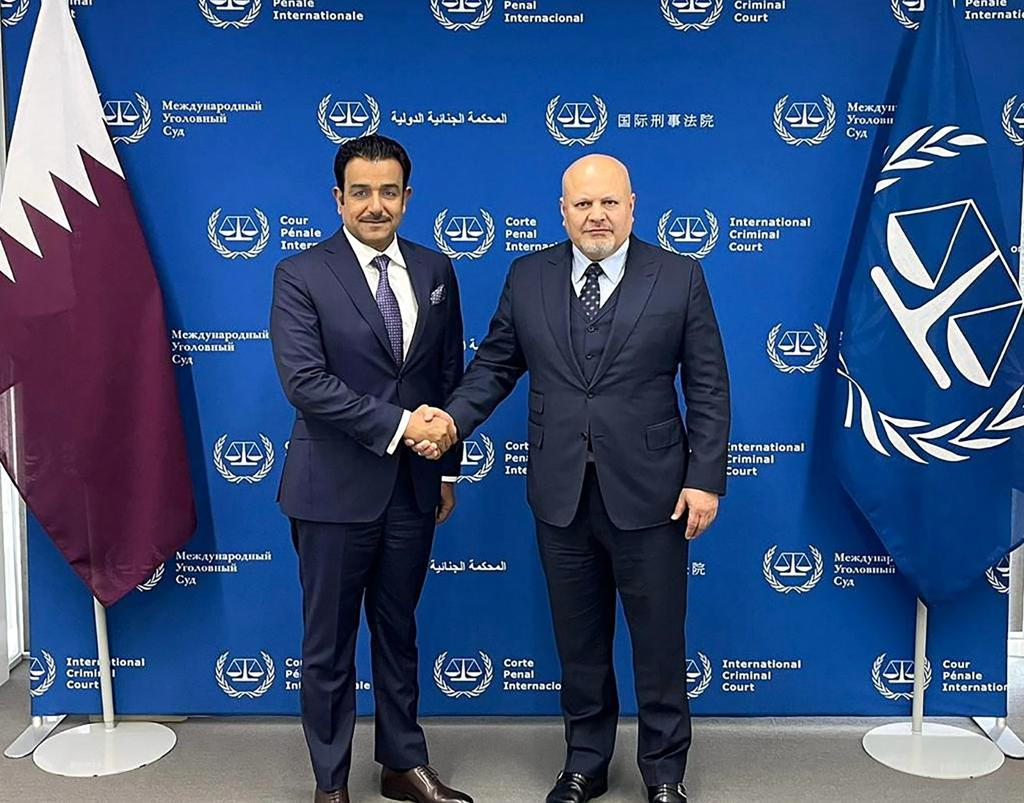
Recent events have brought renewed attention to the conduct of the International Criminal Court. New revelations demonstrate that the court’s chief prosecutor was influenced by Qatar, raising serious concerns about bias in a body that claims to uphold impartial justice. This comes at a time of heightened scrutiny over the court’s actions toward Israel, reflecting growing concern about whether international institutions are applying consistent standards.
Key Findings
- The ICC prosecutor has improper ties to Qatar
- Impartiality within the International Criminal Court under question
- The ICC shows disproportionate focus on Israel compared to other conflicts
Qatar-ICC Link
ICC prosecutor Karim Khan has improper connections with the Qatari state, which offered him protection after sexual abuse accusations against him were raised, suggesting that financial or political considerations may have influenced his actions against Israel.
The ICC operates on the premise of neutrality. Any suggestion that decisions are shaped by outside actors undermines confidence in its rulings. Israel has demonstrated that recent focus on Israeli actions, while giving less attention to other global conflicts, reflects a pattern that deserves closer examination.
ICC Decline
The International Criminal Court was established to investigate and prosecute serious international crimes such as war crimes and crimes against humanity. Its authority depends heavily on the perception that it applies the law evenly.
Israel has long challenged the ICC’s jurisdiction, arguing that it is not a member state and that its legal system is capable of handling its own investigations. The United States has also raised concerns about the court’s reach and accountability. Both countries point to what they see as selective enforcement. Conflicts in Syria, Yemen, and other regions have resulted in significant civilian casualties, yet the level of attention from the ICC has varied. This perceived imbalance is one of the reasons for concerns about political considerations being the main influence of which cases move forward.
Qatar‘s Rise
Qatar maintains relationships with a range of actors, including Western governments and terrorist groups such as Hamas. It positions itself as a mediator in regional disputes, which it leverages to influence organizations that seek the destruction of Western societies.
The Qatari state aggressively seeks to shape international narratives through funding, influence networks, and diplomatic pressure. Hitherto trusted Western institutions such as universities and legal bodies have been the first to succumb to its aggressive influence campaigns, tainting their legitimacy.
Conclusion
At the core of the ICC debate, is legitimacy. Without global trust, the ICC cannot function effectively. So concerns about bias, political influence, and selective enforcement within international legal systems are tanking the credibility of all institutions that claim to represent global justice. Moving forward, transparency and accountability will be central to restoring confidence, before it is too late.