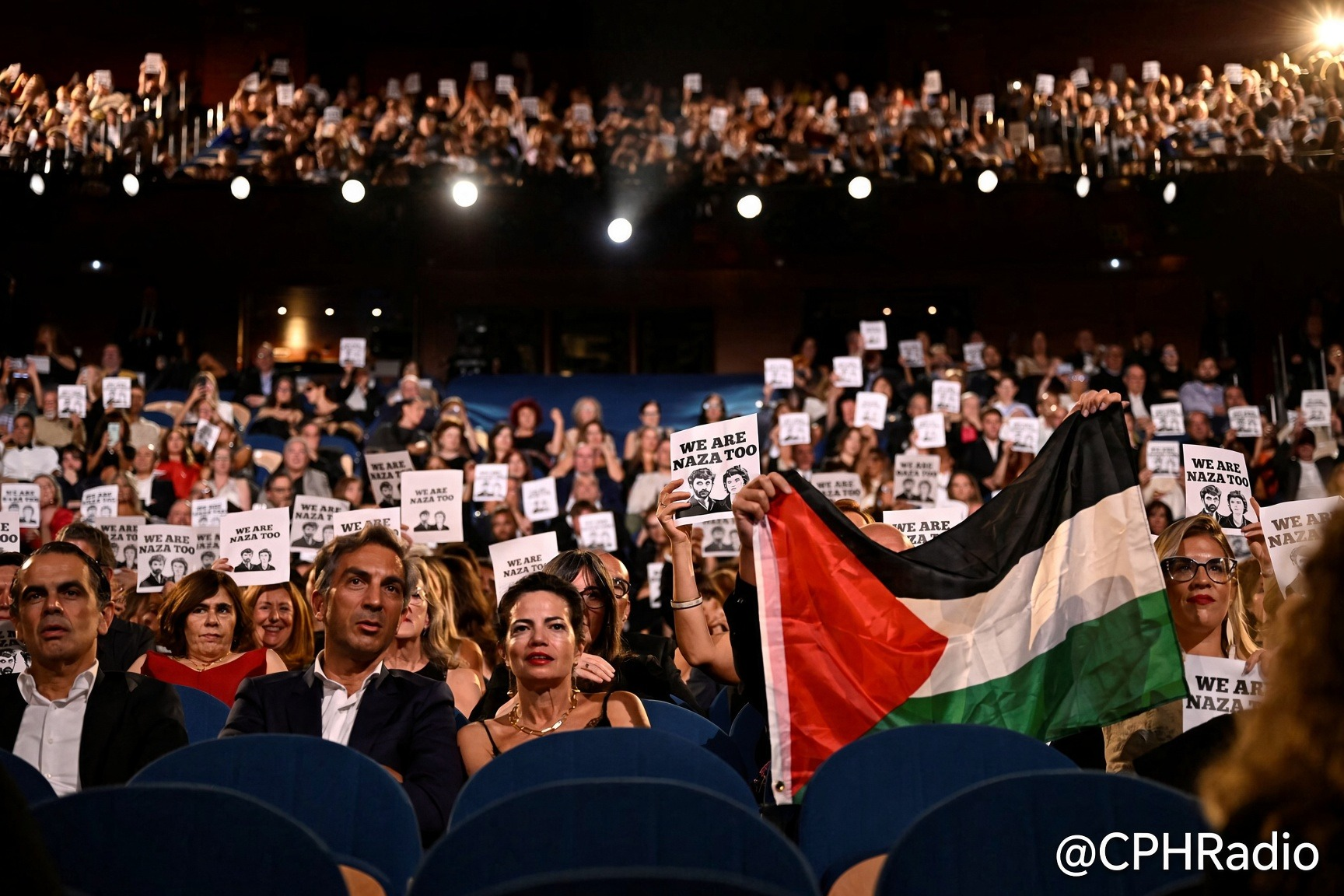
Israel’s own records support the IDF’s claim that Hamas fights from civilian sites with a map and with cases. An IDF presentation plots three kinds of military site across the Khan Younis area, and Israel’s May 2015 report names homes, schools, mosques and a hospital compound used for military purposes in the previous war. The IDF put this at the center of its rebuttal to controversial documentary NAZA. Israel’s Foreign Ministry adds that over 1,000 rockets fired by Hamas and other groups landed inside Gaza.
Key Findings
■The IDF presented a detailed map with three categories of military site in the Khan Younis Brigade area, rockets, tunnel shafts and command and control sites.
■ Israel’s May 2015 report shows that in 2014 Hamas and other groups used “a significant number of residential buildings, schools, mosques, and even medical and U.N. facilities” for military purposes.
■ Israel’s Foreign Ministry states that over 1,000 rockets fired by Hamas and other armed groups landed inside Gaza by December 2023.
■ The Fourth Geneva Convention, to which Israel is a party, states that “The presence of a protected person may not be used to render certain points or areas immune from military operations.”
The IDF rebuttal to NAZA about civilian areas
The IDF’s statement of September 11 2026, answers NAZA with a rebuttal about the other side: “Hamas continues to systematically operate from within the civilian environment, embedding its operatives and military infrastructure among the population and exploiting civilian areas for terrorist purposes.”
The statement sets that claim beside its denial. The IDF states that it “categorically rejects these allegations,” and that “the IDF strikes military targets and makes unprecedented efforts to minimize harm to civilians.” The film’s account, as The Guardian reports it, is about the IDF’s conduct: AI-based systems that identified targets “who were then bombed in their homes at night.”
The two accounts concern different parties, and the law treats them separately. A force that places military assets among civilians breaches one set of rules; the force that attacks them remains bound by another. Article 51(8) of Additional Protocol I says so: a violation of the ban on shielding does not release the other side from its obligations toward civilians. Israel is not a party to Additional Protocols I or II; its May 2015 report states that it “abides by their provisions inasmuch as they reflect rules of customary international law.”
The claim is the center of Israel’s official position. Israel’s Foreign Ministry states, in answers updated to December 8 2023, that “Hamas has spent the last 16 years systematically embedding and dispersing its military operations and assets throughout the entirety of Gaza.” The Foreign Ministry paper of November 2023 states that “it cannot be concluded from the mere fact that seeming ‘civilians’ or ‘civilian objects’ have been targeted, that an attack was unlawful.”
The Khan Younis map

The Khan Younis map, presented by the IDF, names places on both sides of the border: Khan Younis and Khuza’a in Gaza, and across the fence four Israeli communities, Kisufim, Ein HaShlosha, Nirim and Nir Oz. It is currently the only picture of the enemy’s military sites that the IDF presentation records, and the closest the records come to a spatial account of the claim. It spreads the three categories across the whole brigade area, with the command and control markers densest at the center of Khan Younis.
The map offers a clear conclusion: military objectives embedded in a populated area, and a process for attacking them.
2014 War: Hamas & Civilian Homes
Israel’s aforementioned May 2015 report shows that in the 2014 war Hamas and other groups used “a significant number of residential buildings, schools, mosques, and even medical and U.N. facilities for military operational purposes, most often as command and control centers or as arms depots.”
The Foreign Ministry report states that “Commanders in Hamas’s Izz al-Din al-Qassam Brigades also made widespread use of residences for military purposes, often situating command and control centers inside their homes.” Among its cases is a strike on 8 July 2014 on a weapons depot and planning site in a senior Palestinian Islamic Jihad commander’s home, which the IDF considered a target “not because” he lived there, “but because the site was used as an operational planning site.”
A larger building shows the other method. Hamas, the report states, “situated several command and control centres on multiple floors of the ‘Zafer 4’ building,” and the IDF struck it on 23 August 2014 “After providing several effective advance warnings to the building’s occupants and neighbours, and verifying that it was fully vacated.” It adds: “No civilians were harmed in the attack.”
Israel describes the practice as a strategy. Embedding military operations in civilian areas, the report states, “is not ancillary to their main military objectives; nor is it an inevitability of combat within the Gaza Strip. Rather, it is a deliberate and systematic strategy designed to draw IDF forces into combat inside densely populated areas.”
Schools, mosques and other protected sites
Israel’s 2015 report, its own account, names six neighborhoods where schools were used in 2014 for “weapons storage, command and control of operations, and rocket launches”: Beit Lahiya, Jabalia, Sheikh Radwan, Shuja’iyeh, Al-Tuffah and Al-Zaitoun. The report notes that such use “rendered these facilities military objectives under the Law of Armed Conflict.”
The Foreign Ministry report states that : “in a very few cases, military necessity compelled Israel to attack educational facilities that were used for military purposes,” and in none of them was the object a school run by UNRWA, the United Nations agency for Palestine refugees.
On mosques, it states that Hamas and other groups “routinely used mosques all over the Gaza Strip for various military purposes.” In a mosque in Khuza’a on 29 July 2014, after a firefight, IDF forces found “a weapons stockpile and two entrances to combat tunnels in the basement prayer room,” and the report prints photographs. A strike on a tunnel inside a mosque in Al-Zaitoun on 9 August 2014 was carried out “before the time for morning prayers,” after warnings to neighbouring homes.
The Foreign Ministry report states that sensitive sites include “hospitals, educational facilities, cultural property, religious sites, large food factories, power stations” and U.N. facilities, and that “All levels of command receive notice of the location and nature of sensitive sites.”
Hospitals and clinics
Israel’s 2015 report describes one hospital case from 2014 in detail: “militants repeatedly fired at IDF forces from, and set up military surveillance devices within, the Al-Wafa hospital compound” in July of that year. It adds that the IDF “repeatedly warned” authorities in Gaza and international organizations that the military use must stop.
The Foreign Ministry report states that the IDF struck the compound on July 23 2014, after those warnings “went unheeded” and after “confirming multiple times that staff members and other civilians were no longer present.” It notes that medical facilities have “special (though not absolute) protection from attack,” and that IDF orders “strictly limited the circumstances in which such objects could be attacked.”
For the current Gaza War, Israel’s Foreign Ministry paper of November 2023 states that “Hamas systematically conceals some of its most valuable and extensive military centers and assets in and underneath hospitals, including the Al-Shifa hospital, which is the largest hospital in Gaza.” Its December 2023 paper answers state that Hamas built tunnels “with access points located in homes, mosques, schools and even hospitals.”
The treaty rule on hospitals turns on warning. Article 19 of the Fourth Geneva Convention, to which Israel is a party, states that a civilian hospital’s protection “shall not cease unless they are used to commit, outside their humanitarian duties, acts harmful to the enemy,” and may cease “only after due warning has been given, naming, in all appropriate cases, a reasonable time limit and after such warning has remained unheeded.”
The 2014 case clearly follows that sequence: military use, warnings, a strike after the warnings failed.
Hamas vs Civilians
Israel’s May 2015 report quotes a Hamas manual recovered in Shuja’iyeh in 2014, “A Chapter in Urban Combat,” which states that “The soldiers and commanders [of the enemy] must limit their use of weapons and tactics that lead to the harm and unnecessary loss of people and [destruction of] civilian facilities.” Israel cites this as evidence that the constraint was understood and used.
The Foreign Ministry report states that in 2014 Hamas and other groups “significantly increased the risk of harm to Gaza’s civilians” by “conducting military operations in civilian areas by coercing civilians to ignore IDF warnings and remain in the zone of hostilities.” It adds that Hamas militants donned “civilian garb” and disguised themselves “as medical personnel.”
Israel makes the same claim for the current Gaza War. Israel’s Foreign Ministry states that Hamas “consistently and forcibly acts to frustrate these efforts, including by setting up roadblocks, threatening civilians not to leave, and issuing calls to ignore IDF recommendations to evacuate.” Its December 2023 paper describes “Hamas’s repeated efforts to endanger civilian lives by keeping them in areas of increased danger.”
Hamas rockets vs Gaza civilians
Israel’s Foreign Ministry states that “Over 1,000 missiles fired by Hamas have landed in Gaza,” in answers updated to 8 December 2023. The Ministry continues: “These rockets, indiscriminately fired at Israel, have instead exploded within the Gaza Strip. Evidence shows that these rockets exploded in schools and near hospitals, causing untold civilian harm.” It adds that “the likelihood that many hundreds of these rockets have landed in dense urban areas suggest that they are a significant cause of civilian casualties.”
The Foreign Ministry report of 2015 states that “Rockets and mortars fired by these organizations at Israel’s civilian population fell short inside the Gaza Strip,” and that “secondary explosions triggered by IDF attacks on weapons depots located inside civilian homes caused damage to the surrounding areas.”
The IDF presentation’s map places rocket launch sites inside and around Khan Younis, and a rocket that falls short from such a site lands in or near the same populated area.
The Law, when a party fights from civilian areas?
The Fourth Geneva Convention of 1949, to which Israel is a party, states in Article 28 that “The presence of a protected person may not be used to render certain points or areas immune from military operations.” The rule binds the party that places its forces among civilians.
Additional Protocol I adds a duty on the defending side. Article 58 requires parties, “to the maximum extent feasible,” to “avoid locating military objectives within or near densely populated areas,” and Article 51(7) forbids using civilians “to shield military objectives from attacks.” The Rome Statute lists as a war crime “Utilizing the presence of a civilian or other protected person to render certain points, areas or military forces immune from military operations.” Israel is not a party to the Rome Statute.
The same instruments bind the attacking side. Article 51(8) states that a violation of the shielding ban does not release the other party from its obligations toward civilians, “including the obligation to take the precautionary measures provided for in Article 57.” A military objective inside a home remains a lawful target; the civilians around it remain protected, and the expected harm to them is weighed.
Israel’s own statements accept that structure. The Foreign Ministry report of 2015 states that collateral damage is lawful “so long as it is not expected to be excessive in relation to the anticipated military advantage from an attack on a military objective.” The Military Advocate General’s Corps states that civilian harm “in most cases do not by themselves indicate a reasonable suspicion of criminal conduct.”